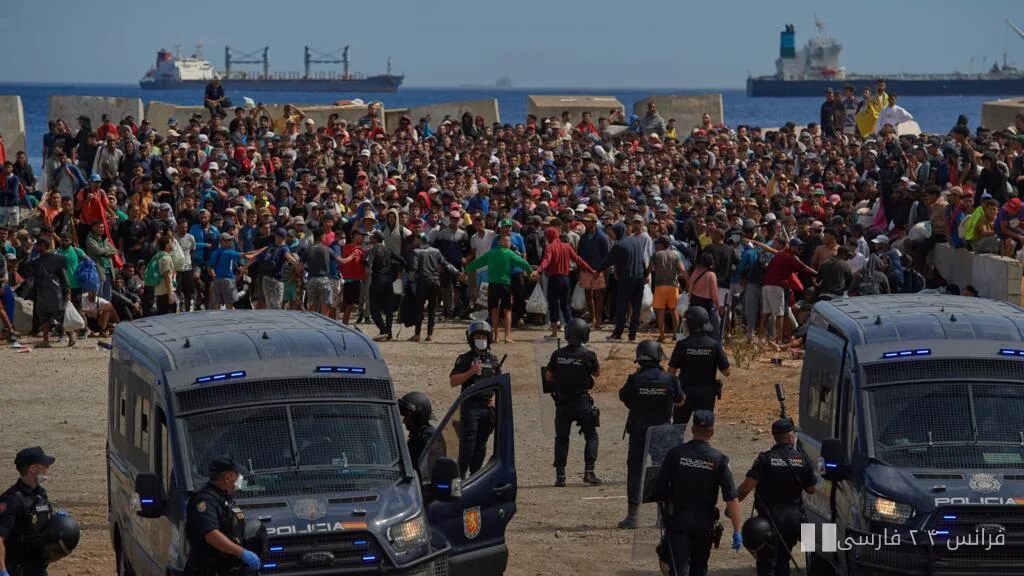
The recent wave of migration to Ceuta, a region in North Africa under Spanish control, clearly reflects the "meaningful silence" and "complete leniency" of the Moroccan police. This report, recently published, examines the behavior of Moroccan security forces in the face of thousands of migrants seeking to enter European territory.
Analysis of the Behavior of the Moroccan Police
According to available information, during the peak days of this wave of migration, the Moroccan police, instead of preventing the passage of migrants, actively supported them and allowed free passage. This behavior raises serious questions about immigration policies and the interactions between Morocco and Spain. Is this leniency a result of political decisions or a consequence of a lack of resources and capabilities to control the borders?
In recent weeks, many images and videos of this wave of migration have been published in the media, showcasing the difficult and dangerous conditions faced by the migrants. Many of them risked their lives in hopes of finding a better life in Europe. Meanwhile, the Moroccan police have clearly appeared as bystanders.
Social and Political Consequences
This situation not only affects relations between Morocco and Spain but could also impact European immigration policies. Given the increasing pressure on borders and the high number of migrants, European countries are expected to seek new solutions to manage this crisis. Can Morocco, as a neighboring country, act as a reliable partner in European immigration policies?
Ultimately, the silence of the Moroccan police in the face of this crisis has raised concerns regarding human rights and presents new challenges for host countries and the international community. These events clearly demonstrate that the migration crisis is not just a humanitarian issue but also a political and social challenge.