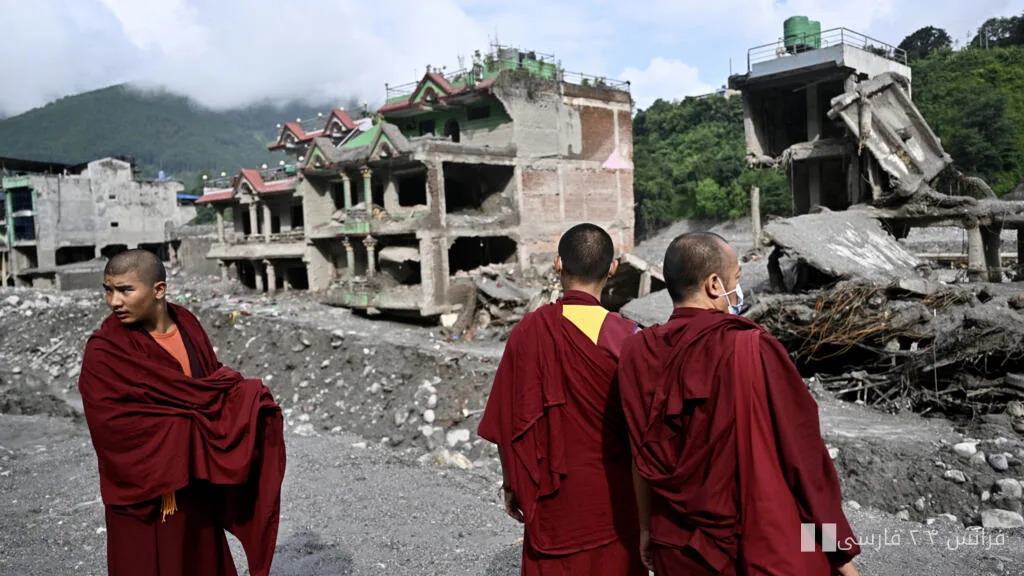
Nepal has declared a day of mourning for the disaster that occurred on August ۲۶ at the border of China and Nepal. This incident, involving the collapse of glaciers and mountains, claimed the lives of at least ۱,۳۹۸ people and left over ۵,۵۰۰ missing, among them about ۸۰۰ foreigners. On this day, flags are flown at half-mast and candlelight ceremonies are planned according to Hindu traditions on the thirteenth day after death.
Hope for Rescue
Hundreds of hydropower workers are among the missing, but the rescue of three individuals from the depths of tunnels – two Nepalis and one Chinese – has kept hopes alive for the rescue of others. A spokesperson for the Nepal Army has stated that rescue efforts continue with the same momentum as on the first day, focusing on search and rescue at three levels: ground, air, and tunnels.
Families of the missing have gathered in Kathmandu, demanding a speed-up in rescue operations. One family expressed hope, saying, "If there is a rescue, then where is the result? We need a result." A rescue tunnel expert from Australia has also pointed out the unprecedented challenges of this operation, stating, "We are facing conditions I have never experienced before."
A Disaster Due to Climate Change
While the exact cause of the glacier collapse is still unclear, climate change is increasingly causing glaciers around the world to melt, raising the risk of such disasters. Nepal, with a population of about ۳۰ million, has recently faced economic pressure, and reconstruction costs are expected to reach billions of dollars. This disaster comes on the eve of the anniversary of anti-corruption protests last September, and the young government now faces a monumental challenge in rebuilding communities and critical infrastructure.
According to UN experts, the damages caused by floods in Nepal are temporarily estimated at $۱۵۸ million, and a request for $۵۰ million in aid for ۸۴,۰۰۰ people has been made by the organization. "This is the right time to help Nepal," they have stated.