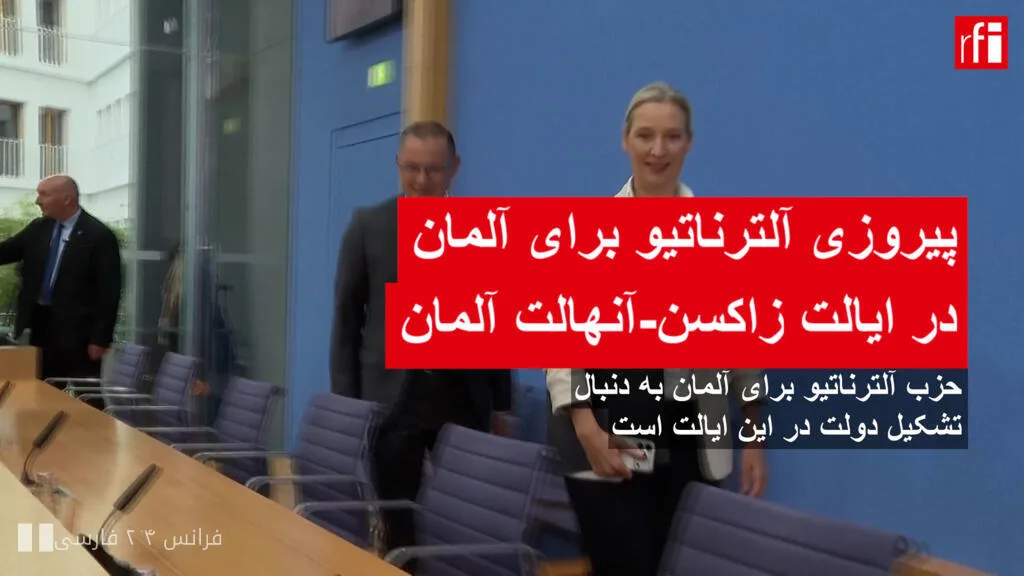
Following the significant victory of the far-right party "AFD" in the state of Saxony-Anhalt, Friedrich Merz, the leader of the Christian Democratic Union of Germany (CDU), firmly announced on Monday that he would continue his reform programs. This defeat has been recorded as one of the worst electoral results for the CDU in several decades.
Consequences of the Election and Merz's Reaction
The AFD, with nearly ۴۴ percent of the electoral votes, demonstrated that it can still influence public opinion and elevate security and social concerns to a high level of public attention. In response to this result, Merz stated firmly that this defeat should not hinder the advancement of the party's reform programs. He emphasized that the CDU must respond to the needs of the people and continue with economic and social reforms.
This election took place while Germany is facing multiple economic and social challenges, and the CDU is trying to present itself as a reformist and modern force in the political arena. It is said that Merz must pay attention to internal party criticisms as well as the increasing influence of far-right groups.
Future Outlook
Merz also pointed out that there is a need for fundamental changes in the CDU's approach and that more attention should be given to youth and various social groups. He has urged party members to view this defeat as an opportunity to rethink electoral strategies and party policies.
However, this approach by Merz faces serious challenges. Will he be able to garner the necessary support for his reforms, or will the CDU reach an impasse under internal and external pressures? The political future of Merz and his party depends on their ability to respond to these questions.