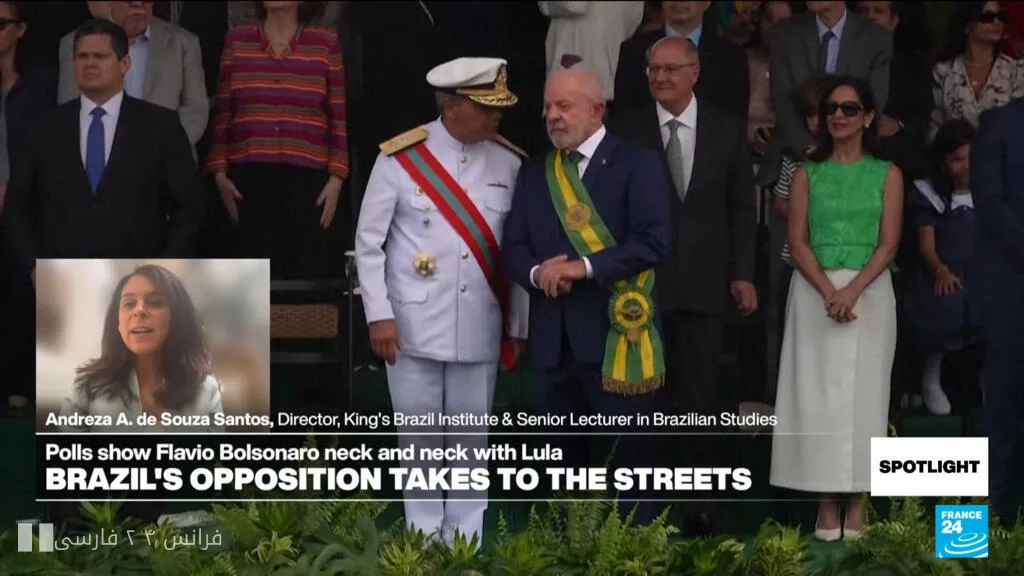
Brazil, a country with a rich history and diverse culture, is on the brink of a pivotal election. Lula da Silva, the current president and a potential candidate, is confronted with significant challenges. While some statistics report economic improvement, the reality of daily life for Brazilians appears to be starkly different.
Economy on Two Parallel Tracks
It seems that macroeconomic performance and political trust in Brazil are moving along two separate paths. Many Brazilians are grappling with the challenges of the cost of living and an unstable job market. While macroeconomic statistics may point to a positive picture of the country's situation, the tangible realities for ordinary citizens are significantly darker.
The political environment in Brazil has also become highly polarized. Lula, who has always been regarded as a popular leader, is now facing serious criticisms and challenges. While some citizens are calling for fundamental changes, another group remains loyal to him and believes in his abilities to lead the country.
Election Outlook
The upcoming elections are of great importance not only for Lula but also for the future of Brazil. Given the current economic and social conditions, predicting the election outcome is not a simple task. Can Lula overcome the challenges and remain a strong candidate? Or will Brazilians seek a change in leadership this time?
Ultimately, what matters in the upcoming elections in Brazil is a deep understanding of the needs and desires of the citizens. If Lula can respond to these demands, he may increase his chances of victory. Otherwise, an uncertain future awaits him.