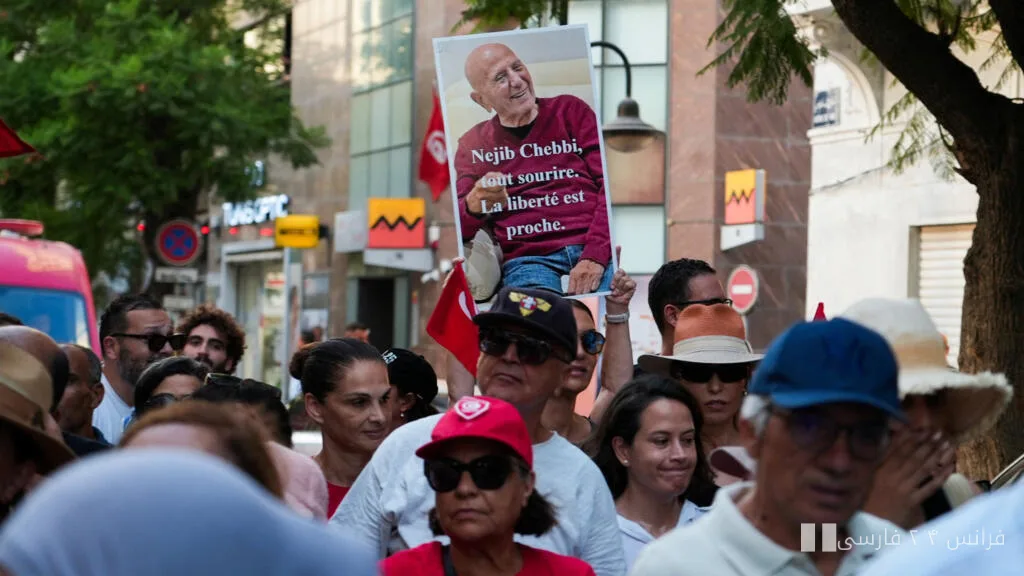
On Thursday, the Tunisian Supreme Court confirmed prison sentences of up to ۴۵ years for opposition leaders, lawyers, and businessmen in a major conspiracy case. This ruling comes as critics believe that this action clearly indicates the continuation and expansion of President Kais Saied's authoritarian rule over the country.
Background of the Case and Its Consequences
The case in question was brought against officials and businessmen on charges of conspiracy against national security. This trial, recognized as one of the largest political trials in Tunisia's history, faced severe criticism and protests. Many analysts believe that these sentences not only target opponents but also serve as a tool to suppress any dissenting voices in Tunisia.
In recent months, Tunisia has witnessed widespread protests due to economic and social crises. In this context, the recent sentences have particularly intensified feelings of anger and despair among youth and political activists. Many of them believe that these decisions aim to suppress any efforts for political and economic reforms in the country.
International and Domestic Reactions
Following this decision, reactions from human rights groups and international organizations have intensified. These groups have called for the immediate release of political prisoners and an end to the repression of opponents. At the same time, it seems that the international community is also concerned about the state of democracy in Tunisia and the increasing power of Kais Saied.
These events indicate a deep political crisis in Tunisia that could have serious implications for the country's future. Is Tunisia moving towards a stable democracy, or will it fall into the trap of despotism? This is a question whose answer depends on future developments.