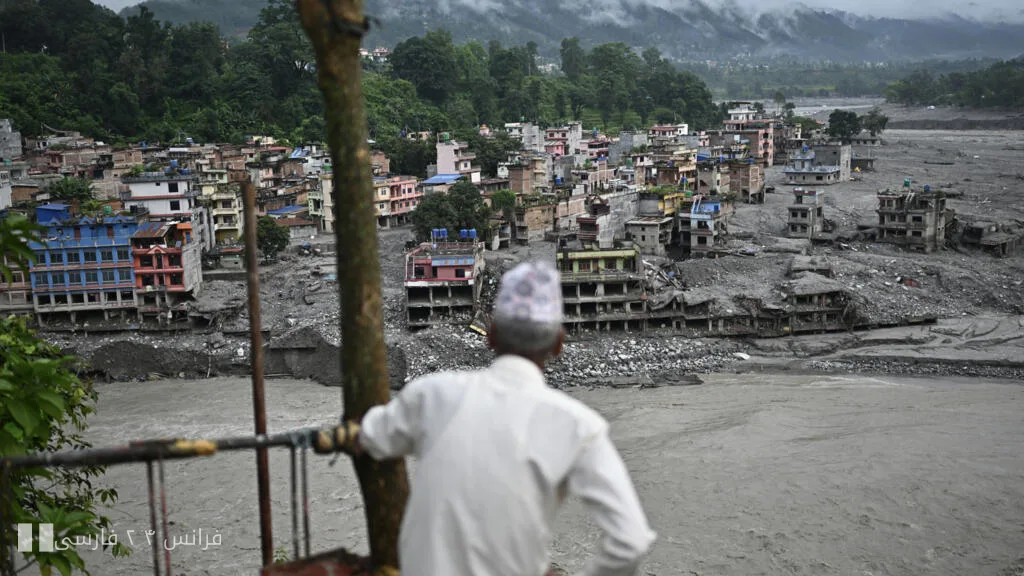
Following a devastating natural disaster in Nepal, the death toll has reached ۱,۴۰۰, and ۵,۸۴۵ people are still reported missing. The incident, caused by glacier collapses and landslides near the Nepal-China border, swept away roads, bridges, and homes, and now Nepali rescuers are trying to find signs of survivors.
Rescue Efforts in the Tunnels
Nepali rescue teams are particularly focused on three hydropower projects where it is believed that several workers may still be trapped. Despite hundreds of power plant workers being among the missing, the rescue of three individuals from the depths of the tunnels—two Nepalis and one Chinese citizen—has revived hopes of finding others alive. According to rescue officials, search and rescue operations are still ongoing, and there is a possibility that individuals in the mentioned projects may be alive.
Human and Climatic Challenges
As the death toll rises, morgues in Nepal are filling up, and officials have been forced to bury hundreds of bodies in mass graves. While the exact cause of the glacier collapse is still unclear, global climate change has led to the rapid melting of glaciers, increasing the risk of such disasters. Nepal, a country with a population of ۳۰ million, is estimated to face reconstruction costs that could reach billions of dollars, as it is primarily a rural country with a minimal contribution to greenhouse gas emissions.
This disaster has created significant challenges for rescue teams in addition to human casualties. David Fisher, an official from humanitarian organizations, pointed to the difficulties in accessing communities trapped by floods, stating, "Every delay means families have to wait longer for essential aid."