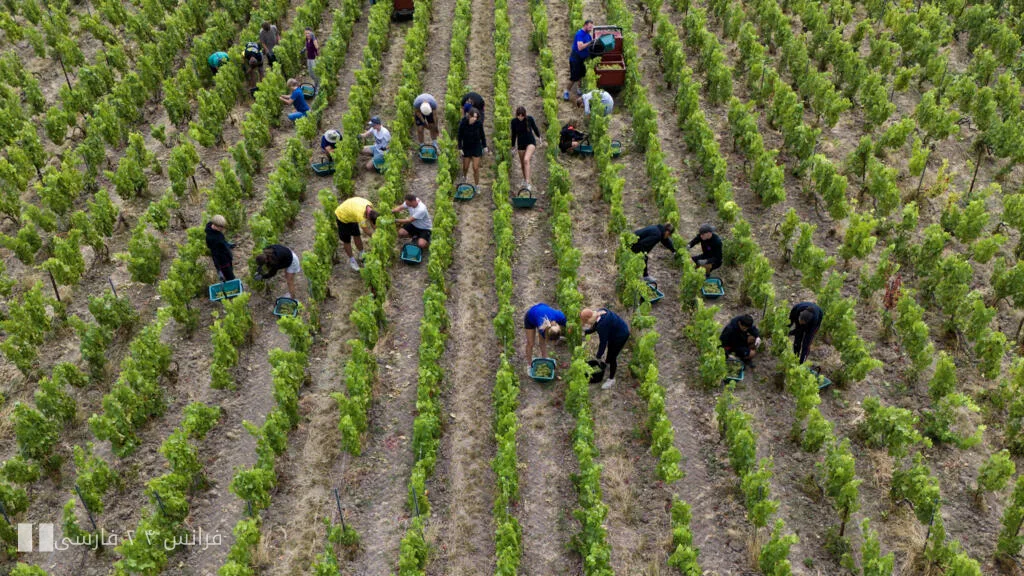
In response to this summer's extreme heat, French officials have allowed Champagne winemakers to raise the alcohol content of this popular beverage by up to ۱۵%. This unprecedented change for the Champagne industry highlights the serious impacts of climate change on agricultural production, particularly in the wine sector.
Challenges from the Heat
As temperatures have risen to unprecedented levels, farmers have been forced to harvest grapes earlier than usual. According to published information, this year has seen the earliest grape harvest in the history of the Champagne region, with the first grapes being picked on August ۶ and general harvesting starting on August ۱۷; this is in contrast to last year when harvesting began two weeks later.
Experts state that the heat causes a rapid increase in sugar levels in the grapes, which in turn leads to higher natural alcohol production. However, these changes do not necessarily mean a higher quality product. Champagne producer groups have expressed hope that this harvest will yield exceptional wines.
Concerning Future
According to forecasts, this unusual type of harvest is likely to become the norm in the next ۱۰ to ۱۵ years. One Champagne industry expert named Maxime Toubart pointed out that this situation should prompt serious reflection on the future of Champagne wine.
On the other hand, while changes in alcohol content raise concerns for some producers, David Chattillon stated that only a limited number of farmers will be affected by these changes. He emphasized that the average alcohol produced after harvest is usually below ۱۲%, and not all Champagne producers will reach this level.
These developments come as France is the second-largest wine producer in the world after Italy, and this summer has raised serious concerns about the impact of climate change on the future of agriculture and wine production.